

Quick answer
Yes — the Hana Highway is safe for a careful, unhurried driver. It is a public road open 00:00–23:59 daily with free entry, so nothing gates access or speed. Risk concentrates in the 620 curves, 59 one-lane bridges, and roadside stops rather than the driving itself. Rain, fatigue and rushing are the genuine variables.
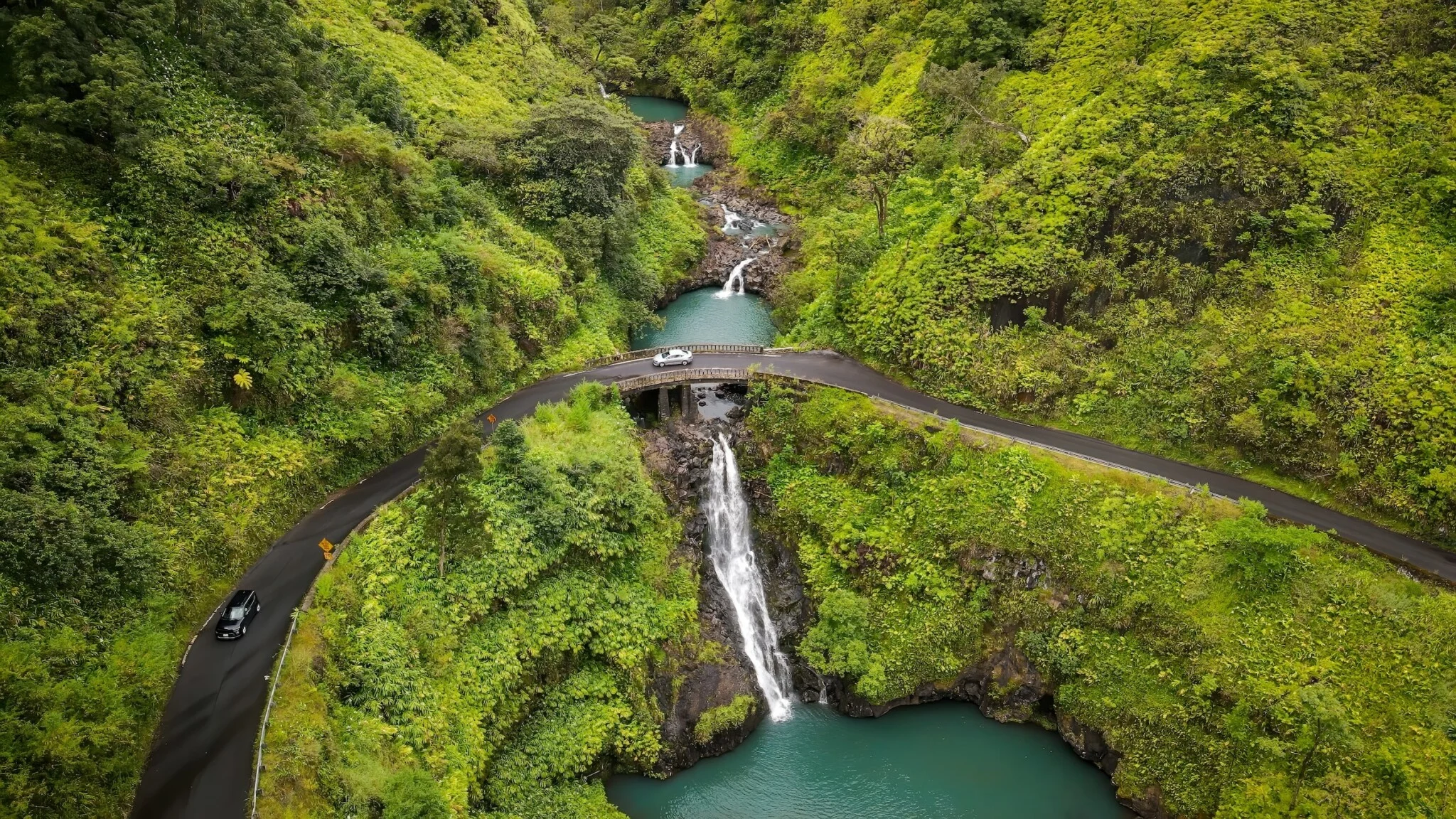
The Hana Highway is not one road but two route numbers — 36 and 360 — stitched into roughly 52 miles that take three hours to drive without a single stop. That ratio explains almost everything. A driver who plans for a two-hour errand and finds themselves eight hours deep, in fading light, on a shelf of asphalt above the Pacific, is the profile behind most trouble reports. So when travellers ask is road to hana safe, the useful reframing is whether their day has enough room in it. The corridor runs free of charge along the windward coast of Maui, from Kahului through Paia, Twin Falls, Ke'anae Peninsula and Wai'anapanapa State Park before reaching Hana town. Entry to the highway itself costs nothing, though individual stops along the way set their own fees and reservation rules — Wai'anapanapa in particular requires advance booking for non-residents. Rainfall on this windward side runs high year-round, and the same moisture that feeds the waterfalls also slicks the pavement and loosens rock above the cutbanks. Guardrails are intermittent. Phone signal is not continuous. Emergency response times lengthen considerably past mile marker 20, which is the practical reason a Maui coastal drive of this kind rewards conservatism rather than confidence. The hazards that actually put visitors in trouble tend to sit outside the vehicle. Waterfall pools have submerged rocks and flash-flood potential after upland rain. Blowholes and lava shelves near Hana carry unpredictable surf. Unmarked trails cross private land. Leptospirosis is present in freshwater streams. None of this is exotic — it is simply a set of risks that a Hana Highway tour brochure tends to underplay and a rental agreement does not mention at all. Those who prefer not to drive have alternatives that remove the variable entirely: guided small-group transport, or a helicopter route that covers the same waterfalls and sea cliffs from above in under an hour. Both leave the navigating to somebody who has done it several hundred times. For everyone else, the honest verdict on the question is road to hana safe comes down to daylight, humility and a willingness to pull over and let locals pass. The highway punishes hurry far more reliably than it punishes inexperience.
“The highway punishes hurry far more reliably than it punishes inexperience.”
Common Mistakes That Impact Whether the Road to Hana Is Safe
Most incidents on the Hana Highway trace back to driver behavior rather than the road itself. These are the preventable errors that turn a manageable drive into a hazardous one.
Filming or photographing while behind the wheel
Hand the camera to a passenger and keep both hands on the wheel. If a view is worth capturing, pull fully into a marked turnout with all four wheels off the travel lane before stopping.
Underestimating how long the drive actually takes
Budget a full day for the round trip on Routes 36 and 360, not a few hours. The mileage is short but the roughly 600 curves and 50-plus one-lane bridges cut average speed dramatically, and rushing to make up time is the single biggest risk factor.
Ignoring posted speed, curve, and bridge signage
Treat the yellow advisory speeds as maximums, not suggestions — they are set for blind curves where oncoming traffic is invisible until the last second. Slow to a near stop before every one-lane bridge and confirm the far side is clear.
Attempting the drive while fatigued or after dark
Drive it rested and in daylight. There is no lighting, no shoulder, and no cell coverage across long stretches, so a tired driver has minimal margin for error.
Tailgating slow vehicles or passing on blind curves
Hold back and wait for the driver ahead to use a pullout. Passing on a curve with no sightline is how head-on collisions happen here.
Driving distracted by navigation apps or passengers
Set your route before departing and pull over to reconfigure it. Cell service drops out repeatedly, and glancing at a phone for two seconds covers the entire width of a single-lane bridge.
Road Rules and Etiquette: How to Ensure Is Road to Hana Safe
The Hana Highway runs through working neighborhoods where residents commute daily across 46 one-lane bridges. Etiquette here is less about courtesy than about keeping traffic moving and people out of harm's way.
Do
- Yield to the vehicle that reached the one-lane bridge first
- Pull into marked turnouts to let local traffic pass
- Cross narrow bridges at posted speeds, usually 10 mph
- Wave a thank-you to drivers who yield to you
- Stay on marked trails and established viewpoints at every stop
- Park only in designated lots, never on the shoulder
Don't
- Do not stop on bridges to photograph waterfalls below
- Do not tailgate residents driving the route to work
- Do not block driveways, cane roads, or private access lanes
- Do not cut across taro fields or fenced private land
- Do not linger in turnouts once a queue forms behind
The Best Arrival Window to Keep Is Road to Hana Safe
The best arrival window to keep the Road to Hana safe is 06:30–08:00. Starting during this time ensures sufficient daylight for navigating sharp turns and helps avoid heavy tour bus traffic.
Early Morning
Minimal congestion—
Starting before 08:00 provides the clearest visibility for road hazards. This timing helps maintain steady momentum through narrow sections.
April and May
Moderate trafficDrier conditions; 75–80°F
Spring months offer more stable road conditions with lower rainfall risks. This reduces the likelihood of localized mud or debris.
September and October
Lower trafficWarm; 78–83°F
These shoulder season months experience fewer visitors than summer. Consistent weather during these months supports better road surface stability.
Verdict: The best time to travel is weekdays between 06:30–08:00 during the months of April, May, September, or October.
A Safety Checklist for Is Road to Hana Safe Travel
Preparation matters more than pace on this route, so work through these items in order from the weeks before your drive to the morning you set out.
-
Reserve permits for Waianapanapa State Park — Out-of-state visitors need advance parking and entry reservations for that stop.
-
Download offline maps for the whole route — Cell service drops out for long stretches past Paia.
-
Book any guided or aerial add-ons early — Popular operators fill their calendars well ahead of peak weeks.
-
Confirm your rental agreement covers the highway — Some contracts restrict travel on unpaved sections beyond Hana.
-
Fill the tank in Paia or Kahului — Fuel stations are scarce until you reach Hana town.
-
Pack water, snacks, and a first-aid kit — Shops are limited and the round trip runs most of a day.
-
Carry cash for roadside stands and stops — Entry along the highway is free, but individual stops may charge separately.
-
Leave between 06:30 and 08:00 — That window gives you daylight and a clearer road.
Check availability
Frequently asked questions about is road to hana safe
Everything you need to know about is road to hana safe